


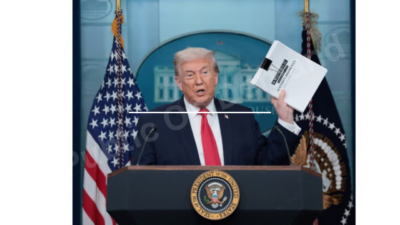
Trump openly criticized Mojtaba Khamenei, calling him a “lightweight”.
The geopolitical situation in the Middle East has taken another dramatic turn after Donald Trump made a bold statement about Iran’s political future. The former U.S. president said he wants the United States to have a role in choosing Iran’s next Supreme Leader, rejecting the idea that Mojtaba Khamenei, the son of Ali Khamenei, should take over leadership of the country.
Trump’s remarks have sparked intense global debate, with critics questioning whether a foreign leader should influence Iran’s internal political succession. Supporters, however, argue that the U.S. has a strategic interest in ensuring stability in the region.
Trump Rejects Khamenei’s Son as Successor
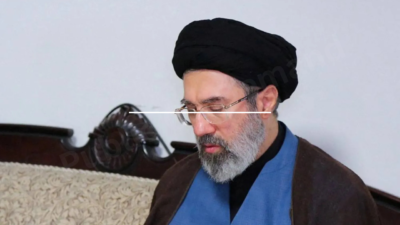
Mojtaba Khamenei possible successor of Iran Supreme LeaderDuring an interview discussing Iran’s leadership transition, Trump openly criticized Mojtaba Khamenei, calling him a “lightweight” and saying he would not accept him as the next leader of Iran.
According to Trump, allowing someone who follows the same policies as the previous regime could lead to renewed conflict between Iran and the United States. He suggested that the U.S. should have some influence over the leadership transition to prevent another war in the future.
Trump stated that Iran would be “wasting its time” if it chose a successor without considering U.S. interests and insisted that he should be involved in the process.
Background: Iran’s Leadership Crisis
Mojtaba Khamenei possible successor of Iran Supreme LeaderThe controversy comes after the death of Iran’s long-time Supreme Leader Ali Khamenei, which has triggered a leadership struggle within the country. The Assembly of Experts, Iran’s powerful clerical body, is responsible for selecting the next Supreme Leader.
Among the potential candidates, Mojtaba Khamenei has emerged as one of the strongest contenders. He is considered a politically influential cleric with close ties to Iran’s powerful Islamic Revolutionary Guard Corps (IRGC) and has long been active behind the scenes in Iranian politics.
However, the possibility of a father-to-son succession has drawn criticism both inside and outside Iran, with some analysts warning it could resemble a hereditary political system rather than a traditional clerical appointment.
Trump’s Argument for U.S. Involvement
Trump compared the situation in Iran to past geopolitical interventions where the United States influenced leadership outcomes in other countries. He argued that choosing a leader who promotes stability and cooperation could prevent another cycle of conflict between Iran and the West.
His comments suggest that Washington should support a candidate who would bring “harmony and peace” to Iran and reduce regional tensions.
However, the idea of U.S. involvement in selecting Iran’s leader is highly controversial and could further escalate tensions between the two countries.
Global Reactions and Concerns
Trump’s remarks have triggered strong reactions among international observers and political leaders. Critics say that Iran’s leadership transition is strictly an internal matter, and foreign interference could worsen diplomatic relations.
Meanwhile, supporters of a stronger U.S. stance argue that Iran’s leadership decisions directly affect global security, energy markets, and the stability of the Middle East.
As Iran prepares to select its next Supreme Leader, the situation remains uncertain. The leadership choice could shape the country’s domestic policies and its relationship with the United States and other world powers for years to come.
Source: