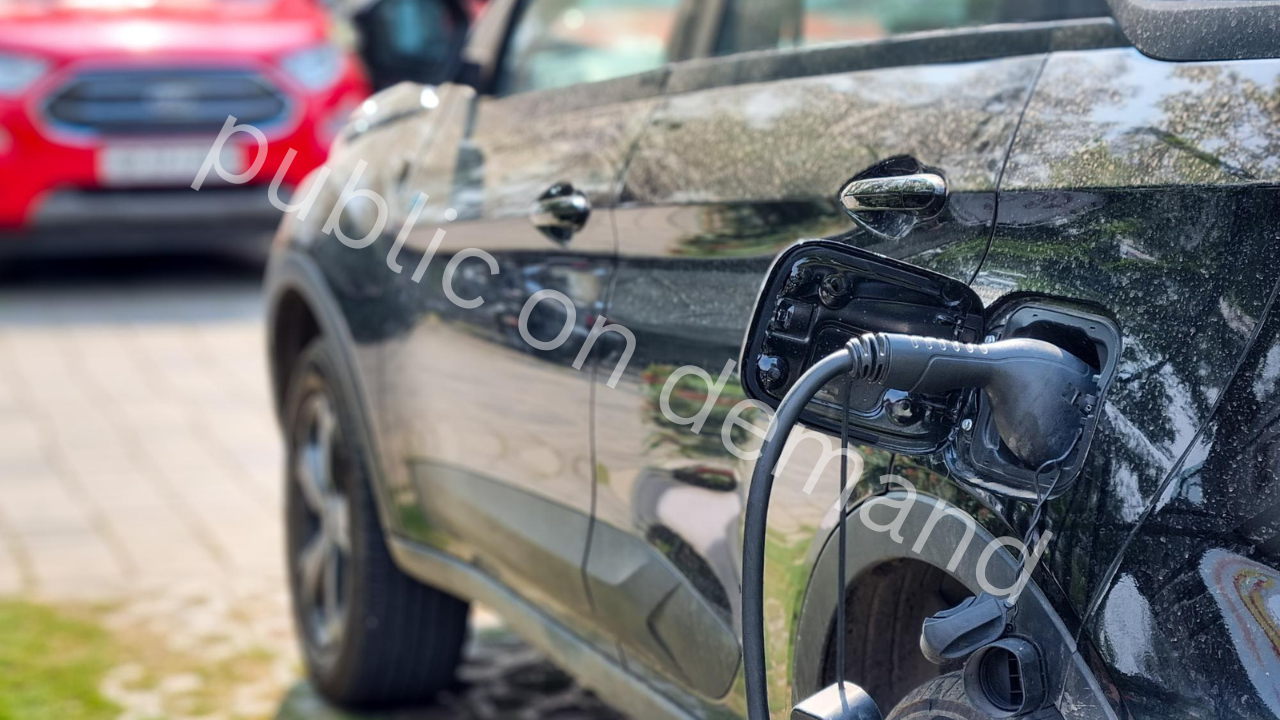
EV Charging News Today highlights the government’s plan to expand electric vehicle charging infrastructure across major cities and highways.
The global shift toward sustainable transportation has found its newest and most ambitious champion in India. In a landmark announcement today, the Indian government unveiled a comprehensive roadmap to significantly expand the country’s electric vehicle (EV) charging infrastructure. This initiative marks a pivotal moment in India’s journey toward its “Net Zero” emissions target, aiming to dismantle the most significant barrier to EV adoption: range anxiety.
By focusing on a multi-tiered rollout across major metropolitan hubs, national highways, and commercial zones, the government is not just building chargers; it is building the foundation of a new economic era. This nationwide expansion is designed to provide the necessary “fueling” security that will transition electric mobility from a niche luxury to a mainstream necessity.
A Strategic Vision: What Was Announced
The Ministry of Heavy Industries (MHI) has outlined a phased approach to saturate the Indian landscape with accessible charging solutions. The core of the announcement centers on the deployment of thousands of new charging stations, supported by updated policy frameworks aimed at streamlining the installation process.
This EV Charging News Today update reflects India’s growing focus on clean transport.
Central to this push is the continued evolution of the Faster Adoption and Manufacturing of (Hybrid &) Electric Vehicles (FAME) scheme. By providing subsidies and incentives for charging station operators, the government is lowering the entry barrier for private players. The updated policy, which can be explored in detail at the Ministry of Heavy Industries, emphasizes a public-private partnership (PPP) model to ensure that the infrastructure is not only widespread but also technologically advanced and well-maintained.
Mapping the Charge: Key Focus Areas
The government’s strategy is surgical, targeting three primary sectors where charging demand is highest and most critical for consumer confidence.
1. Urban Charging Hubs
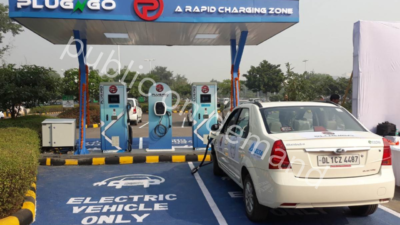
In cities like Delhi, Mumbai, Bengaluru, and Hyderabad, the density of EVs is rising faster than the infrastructure can keep up. The new plan focuses on creating “charging hubs” in high-traffic areas. These include shopping malls, metro stations, and large residential complexes. By integrating charging points into the daily flow of urban life, the government aims to make charging as effortless as parking a car.
2. Highway Fast-Charging Corridors
Perhaps the most significant deterrent for potential EV buyers is the fear of being stranded during long-distance travel. To combat this, the expansion includes a dedicated focus on national highways and expressways. The plan stipulates the installation of high-capacity fast chargers at regular intervals—typically every 25 to 50 kilometers. This “Green Corridor” approach will link major cities, making interstate EV travel a viable reality for the first time on a national scale.
3. Public Parking and Commercial Zones
The initiative also mandates the inclusion of charging points in public parking lots and commercial office spaces. By working with municipal corporations, the government plans to retrofit existing parking infrastructure with AC and DC charging stations, ensuring that fleet operators—such as delivery services and ride-sharing platforms—can maintain high uptime.
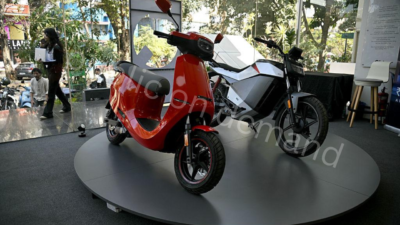
The Role of Policy and Governance
The success of such a massive undertaking requires seamless coordination between various government arms. NITI Aayog, the government’s premier policy think tank, has been instrumental in drafting the “Battery Swapping Policy” and the “Electric Mobility Vision 2030.” Their role involves ensuring that the charging standards remain interoperable, meaning a single vehicle should be able to charge at any station, regardless of the service provider.
Furthermore, the integration of these chargers into the national grid is being overseen by the Ministry of Power. This ensures that the sudden surge in electricity demand does not destabilize the grid. The focus is on “Smart Charging,” where vehicles charge during off-peak hours, and “Vehicle-to-Grid” (V2G) technology, which could eventually allow EVs to feed power back into the grid during emergencies.
Economic Transformation: Investment and Job Creation
The nationwide expansion of EV infrastructure is more than an environmental project; it is a massive economic engine. The government anticipates that this rollout will trigger a wave of domestic and foreign investment.
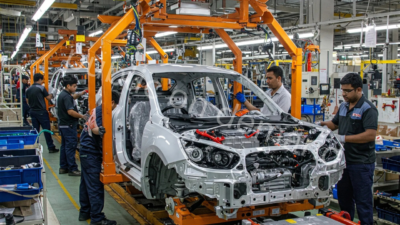
- Supporting Local Manufacturing: As the demand for charging hardware grows, “Make in India” initiatives are expected to flourish. From power electronics to cable manufacturing, local industries are poised to become global suppliers.
- Employment Generation: The installation, operation, and maintenance of thousands of charging stations will create a new category of “green-collar” jobs. This includes specialized electricians, software engineers for charging management systems, and site maintenance crews.
- Energy Independence: By shifting from imported fossil fuels to domestically produced electricity—increasingly sourced from renewables—India can significantly improve its trade balance and energy security.
The Ministry of New and Renewable Energy (MNRE) is working alongside these efforts to ensure that the power used to charge these vehicles increasingly comes from solar and wind energy, truly “greening” the entire value chain.
Impact on Citizens: A New Way to Drive
For the average citizen, the government’s plan represents a shift in lifestyle. The primary benefit is the drastic reduction in “range anxiety.” Knowing that a charger is always within a few kilometers changes the psychological landscape for drivers, making the switch to electric a logical rather than a risky choice.
Furthermore, the proliferation of infrastructure is expected to drive down the total cost of ownership (TCO) for EVs. While the initial purchase price of an EV may be higher than a traditional internal combustion engine (ICE) vehicle, the significantly lower cost of electricity per kilometer and reduced maintenance costs make EVs more economical in the long run. Improved accessibility means users can optimize their charging schedules, taking advantage of lower nighttime tariffs or workplace charging incentives.
Challenges and the Path Ahead
While the announcement is a cause for celebration, the road to a fully electrified nation is not without its hurdles. Land acquisition for highway stations, the high cost of upgrading local distribution transformers, and the need for standardized billing systems are challenges that the government must address in the implementation phase.
However, the phased rollout approach suggests a pragmatic understanding of these obstacles. By starting with high-impact zones and scaling upward, the government can iterate on its strategy based on real-world data and user feedback.
Conclusion: A Future in Motion
Today’s announcement marks a definitive turning point for India’s automotive and energy sectors. By committing to a nationwide expansion of EV charging infrastructure, the government has sent a clear signal to manufacturers, investors, and citizens: the future of Indian mobility is electric.
As these plans move from policy documents to concrete and cables, the impact will be felt across the country—from the smog-heavy streets of the metros to the vast stretches of the national highways. With the combined efforts of the Ministry of Heavy Industries, NITI Aayog, and the Ministry of Power, India is not just following the global trend of electrification; it is positioning itself to lead it. For the Indian commuter, the message is clear: the infrastructure is coming, the technology is ready, and the road ahead is cleaner than ever before.
Read more in our Latest Automobile News